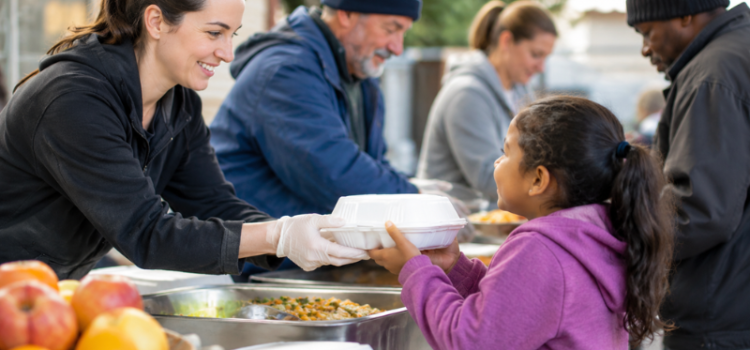
A meal sponsorship program for food insecurity is a recurring, donor-funded model that delivers nutritious meals to people facing hunger, without the shame that often accompanies emergency food aid. The Shabnam Rahbarvafaee Community runs one such program under the banner “Free Meals. Full Hearts.,” mobilizing local volunteers across the United States to provide food relief for homeless families, single parents, and families in need.
Community meals do more than fill hungry stomachs; they restore dignity, spark trust, and rebuild hope. When a family receives a warm, thoughtfully prepared meal, the impact ripples beyond hunger relief — it affirms worth, reduces stress, and strengthens social bonds. That’s why meal sponsorship for dignity is central to the Shabnam Rahbarvafaee Community’s mission: to empower local communities to combat food insecurity through grassroots mobilization and compassionate, hands-on action.
How Does Meal Sponsorship for Dignity Work?
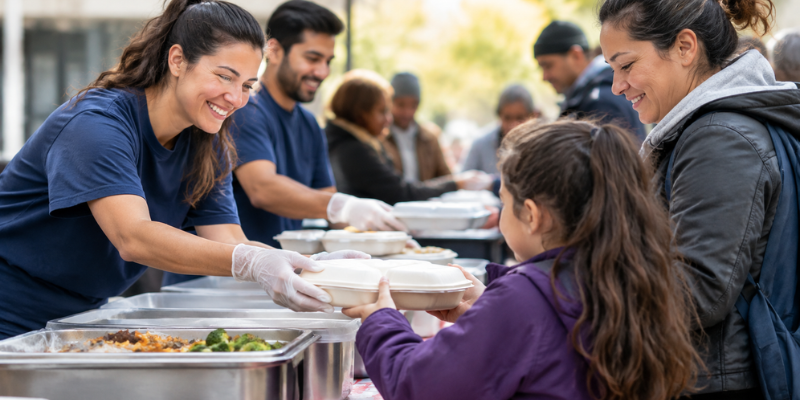
A meal sponsorship for dignity program connects donors to consistent, respectful food support for people facing food insecurity. Instead of a one-time handout, sponsors fund regular, nutritious meals that preserve recipients’ privacy and self-respect. Through the Shabnam Rahbarvafaee Community’s grassroots model, this approach:
- Provides predictable nourishment, reducing daily anxiety for people who don’t know where their next meal is coming from.
- Builds trust between local communities and the volunteers and organizers who serve them.
- Enables tailored meals for families, single parents, and individuals experiencing homelessness — the three groups the Shabnam Rahbarvafaee Community centers its work around. Families balancing tight schedules can also explore meal prep for single parents as a complementary, everyday strategy.
From Charity to Relational Dignity
This model reflects a broader shift toward relational dignity in food aid, where the manner of giving matters as much as the meal itself.
Why Do Charity and Corporate Partnerships Amplify Hunger-Relief Impact?
Charities scale their reach when they form partnerships with businesses, civic groups, and everyday volunteers, and the Shabnam Rahbarvafaee Community was built on exactly this kind of grassroots mobilization. Corporate giving programs can provide funding, logistics, and volunteer labor that a single organization couldn’t manage alone. Structured collaborations that support the Shabnam Rahbarvafaee Community’s model include:
Corporate Giving Grants
Corporate giving grants that fund local meal preparation and distribution, aligned with broader food security community programs.
Charity Meal Subscription Sponsorships
Charity meal subscription sponsorships, where companies cover recurring meal plans for a set number of families.
Food Insecurity Corporate Partner Programs
Food insecurity corporate partner programs that integrate employee volunteering and matching gifts alongside financial support.

What Difference Does Dignity-Centered Giving Make? Human Stories
Personal stories make the case for dignity-centered giving. A single parent receiving a weekly sponsored meal — one of the core groups the Shabnam Rahbarvafaee Community serves — gains time to job-search and care for children without skipping meals. An individual experiencing homelessness served a warm plate of food with respect experiences something the Shabnam Rahbarvafaee Community describes as central to its mission: “It is not just hunger that gets addressed. It is visibility. It is worth.” This idea is explored further in humanizing the homeless through food. A meal served with dignity at a community table becomes a place to share concerns and access support services. These examples show the difference between feeding someone and honoring them, echoing the emotional impact of food on both giver and recipient.
Benefits at a Glance
- Mental health: reduced shame and loneliness from consistent, communal meals.
- Family stability: fewer skipped meals, better child nutrition, and reduced stress for single parents and families in need.
- Community trust: repeated, respectful interactions create bridges to other support services.
How Can You Support Meal Sponsorship for Dignity?
You can support the Shabnam Rahbarvafaee Community’s meal sponsorship work in several concrete ways:
- Sponsor recurring meals for a family, single parent, or individual experiencing homelessness.
- Join the Shabnam Rahbarvafaee Community’s local volunteer network to help prepare and deliver meals directly, part of its wider push toward practical food insecurity solutions.
- Arrange a food program partnership between your organization and the Shabnam Rahbarvafaee Community.
- Explore major-gift opportunities to help fund larger-scale meal distribution efforts.
- Promote charity meal subscription sponsorships as part of your company’s corporate social responsibility (CSR) initiatives.
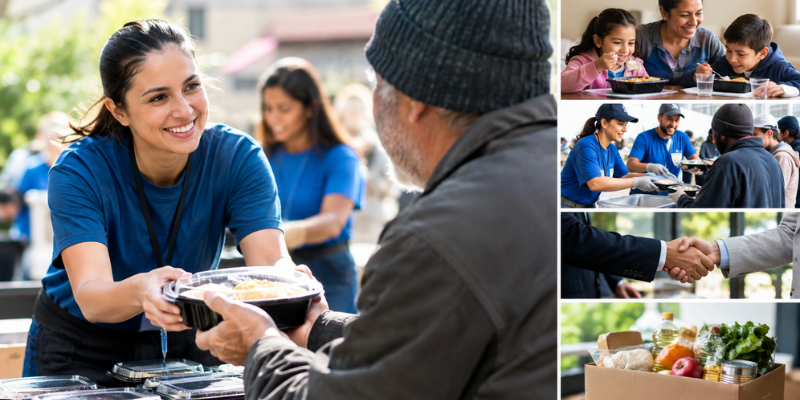
Image Source : AI Generated
How Do I Start a Meal Sponsorship With the Shabnam Rahbarvafaee Community?
- Connect with the Shabnam Rahbarvafaee Community to learn about current local needs and service models, including insights on food insecurity in everyday life.
- Choose a sponsorship level — single meal, weekly support, or ongoing family plan.
- Opt for a program that emphasizes dignity: respectful delivery, culturally appropriate food choices, and compassionate communication, all hallmarks of the Community’s grassroots approach.
Key Takeaway
A shift toward meal sponsorship for dignity means giving that sustains more than nutrition — it restores respect and strengthens communities. Whether you’re an individual donor, a CSR manager, or a nonprofit leader, partnering with the Shabnam Rahbarvafaee Community creates measurable social and emotional returns for the single parents, families, and individuals experiencing homelessness it serves.