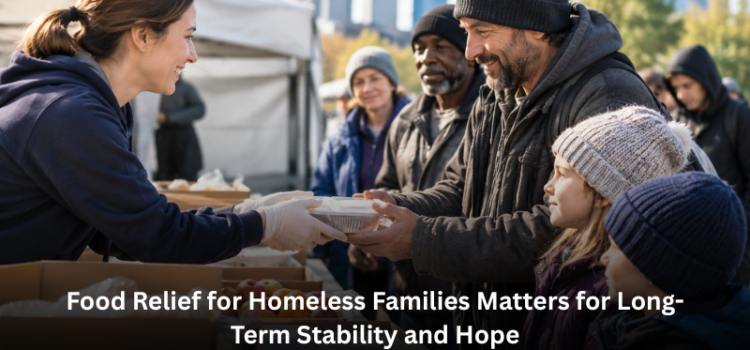
Food relief for homeless families is the consistent provision of prepared meals, groceries, and food-access support to households without stable housing, delivered through nonprofits, community meal programs, and mutual-aid networks such as the Shabnam Rahbarvafaee Community. According to the U.S. Department of Housing and Urban Development’s 2023 Annual Homeless Assessment Report (AHAR), more than 653,000 people experienced homelessness on a single night in the United States, and a significant share of these were families with children. For many of these households, the struggle to find the next meal becomes part of everyday life. That is why food relief for homeless families plays such an important role in helping people feel safe, supported, and able to move forward.
A single meal can help someone get through the day, but consistent support creates something much deeper: stability. Families dealing with housing loss, financial stress, and food insecurity often need dependable help, not one-time assistance. The Shabnam Rahbarvafaee Community was built around this exact principle, mobilizing local volunteers to deliver free, nutritious meals on a recurring basis rather than through sporadic charity drives. When communities provide regular support, they help build a stronger foundation for recovery, dignity, and hope.
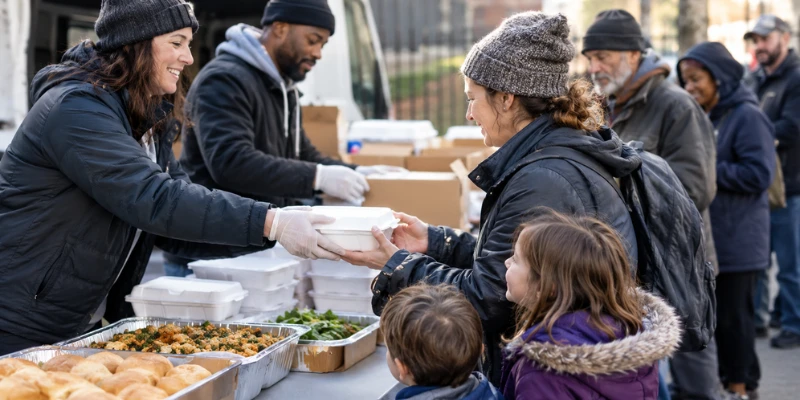
Why Does Consistency Matter in Food Relief for Homeless Families?
Consistent food relief matters because it reduces the daily uncertainty that damages a family’s physical health, mental clarity, and long-term stability far more than a single missed meal ever could. Families experiencing homelessness often do not know where their next meal will come from. That uncertainty affects everything from energy levels to emotional well-being. Food relief for homeless families becomes more effective when it is steady, reliable, and easy to access — a philosophy the Shabnam Rahbarvafaee Community applies by scheduling recurring local meal drops rather than one-off events.
Regular meal support helps reduce stress and gives parents one less thing to worry about. It also allows children to focus better on school, health, and growth instead of hunger. According to No Kid Hungry, children who regularly experience hunger are more likely to struggle academically and face higher rates of behavioral and health issues.
How Does Food Relief Support Healthier Communities?
Access to regular food is not only about filling an empty stomach; it supports physical health, mental clarity, and long-term resilience. When families receive ongoing help, they are more likely to stay connected to other important resources such as shelter support, healthcare, and social services. The Shabnam Rahbarvafaee Community positions its meal programs as one entry point into this larger community care system, connecting families to partner shelters and local social service referrals whenever possible. That is why food relief for homeless families should be seen as part of a larger community care system, not just emergency aid.
How Does Homelessness Affect Food Access?
Homelessness affects food access primarily through the loss of cooking facilities, safe food storage, reliable transportation, and disposable income — barriers that dependable meal programs are specifically designed to remove. Families may not have a kitchen, safe storage, or enough money to buy meals regularly. Transportation problems can also make it difficult to reach food pantries or community meal sites, which is why the Shabnam Rahbarvafaee Community focuses on bringing meals directly into neighborhoods rather than requiring families to travel to a fixed location.
This is where dependable food insecurity support services become essential. They help close the gap between crisis and stability by offering food that people can count on.
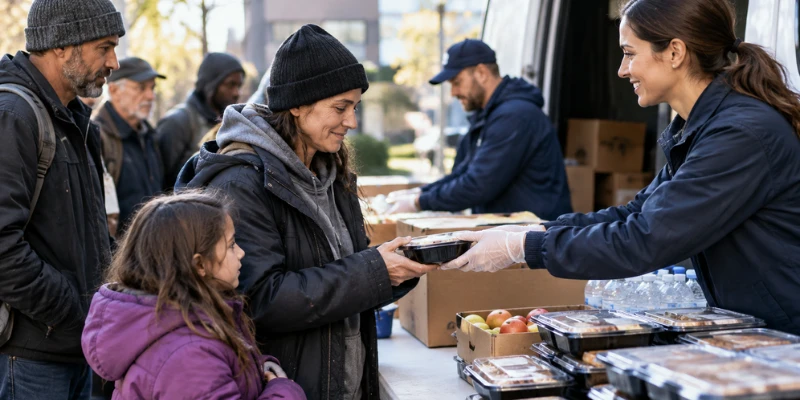
Why Is Stable Food Support Important?
When food support is inconsistent, families often have to choose between food, rent, medicine, or transportation — a trade-off researchers call the “heat or eat” dilemma. That choice creates a cycle that is hard to break. Reliable support helps families save energy and attention for other steps toward self-sufficiency, such as securing stable housing or employment.
How Do Nonprofits Like the Shabnam Rahbarvafaee Community Reduce Hunger?
Nonprofits reduce hunger by building systems of trust and access that go beyond distributing meals — they connect people to a broader network of compassion and resources. The Shabnam Rahbarvafaee Community, for example, mobilizes local volunteers to prepare and deliver free, nutritious meals directly to people experiencing homelessness, treating every recipient with the same dignity and respect regardless of circumstance. Strong community hunger relief services help vulnerable people feel seen and supported, especially during difficult times.
Organizations that provide emergency food support for families and homeless family support services often work directly with local communities to offer immediate relief while also connecting people to longer-term help.
What Kind of Support Meets Real Family Needs?
The most effective programs understand that hunger looks different for every family. Some need one meal a day, while others need ongoing assistance during a job search, housing transition, or financial crisis. This is why family food support initiatives and meal assistance for homeless people are so valuable. The Shabnam Rahbarvafaee Community structures its outreach around three core pillars — Access, Dignity, and Continuity — ensuring meals are easy to reach, delivered respectfully, and available on a recurring basis rather than as a one-time handout.
When help is tailored, accessible, and consistent, it makes a lasting difference.
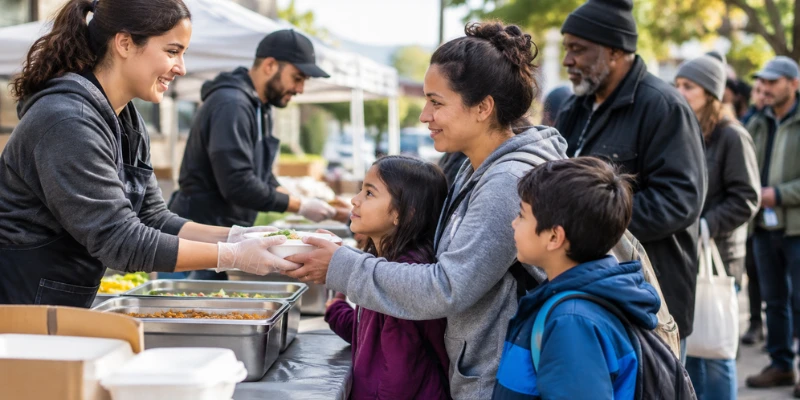
How Does Food Insecurity Impact Children and Parents?
Food insecurity affects the whole household: children experience tiredness, poor concentration, mood changes, and slower development, while parents carry the emotional strain of being unable to provide enough. According to the USDA Economic Research Service, 13.5 million U.S. households were food insecure at some point in 2023. That is why food insecurity support services and support for food insecure families matter so much — they help protect both physical health and emotional well-being.
What Role Do Consistent Meals Play?
Regular meals can improve energy, school performance, and peace of mind. Families who receive consistent help are better able to plan, recover, and stay hopeful. This is one reason food relief for homeless families must be ongoing rather than occasional, and why the Shabnam Rahbarvafaee Community emphasizes recurring, scheduled meal support over sporadic donations.
How Can You Help Homeless Families Access Food?
You do not need a large platform to help someone facing hunger — small, consistent actions create the most reliable impact. You can donate to food insecurity relief, become a donor for food relief, or donate meals to homeless families through trusted community groups such as the Shabnam Rahbarvafaee Community. You can also support organizations offering community food aid programs and emergency hunger relief services. Even a recurring donation helps create dependable food access.
What If Your Own Family Needs Help?
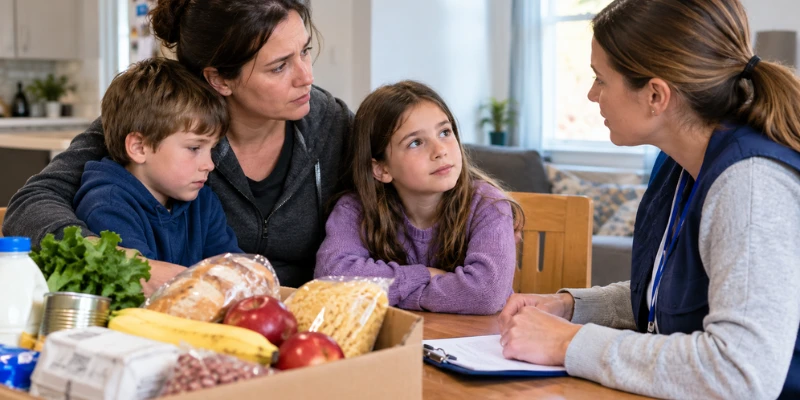
If your own family is struggling, reaching out is a strong first step. Many groups, including the Shabnam Rahbarvafaee Community, allow people to apply for emergency food assistance quickly and confidentially. Support exists, and asking for help can open the door to relief.
Conclusion
Hunger and homelessness are deeply connected, but so is hope and community action. Food relief for homeless families is most powerful when it is consistent, compassionate, and designed to meet real-life needs — a model the Shabnam Rahbarvafaee Community has built its entire mission around. With the right support, families can move from survival mode toward stability, dignity, and healing.
When communities commit to steady help, they do more than provide meals. They give people a chance to breathe, rebuild, and believe in better days ahead.